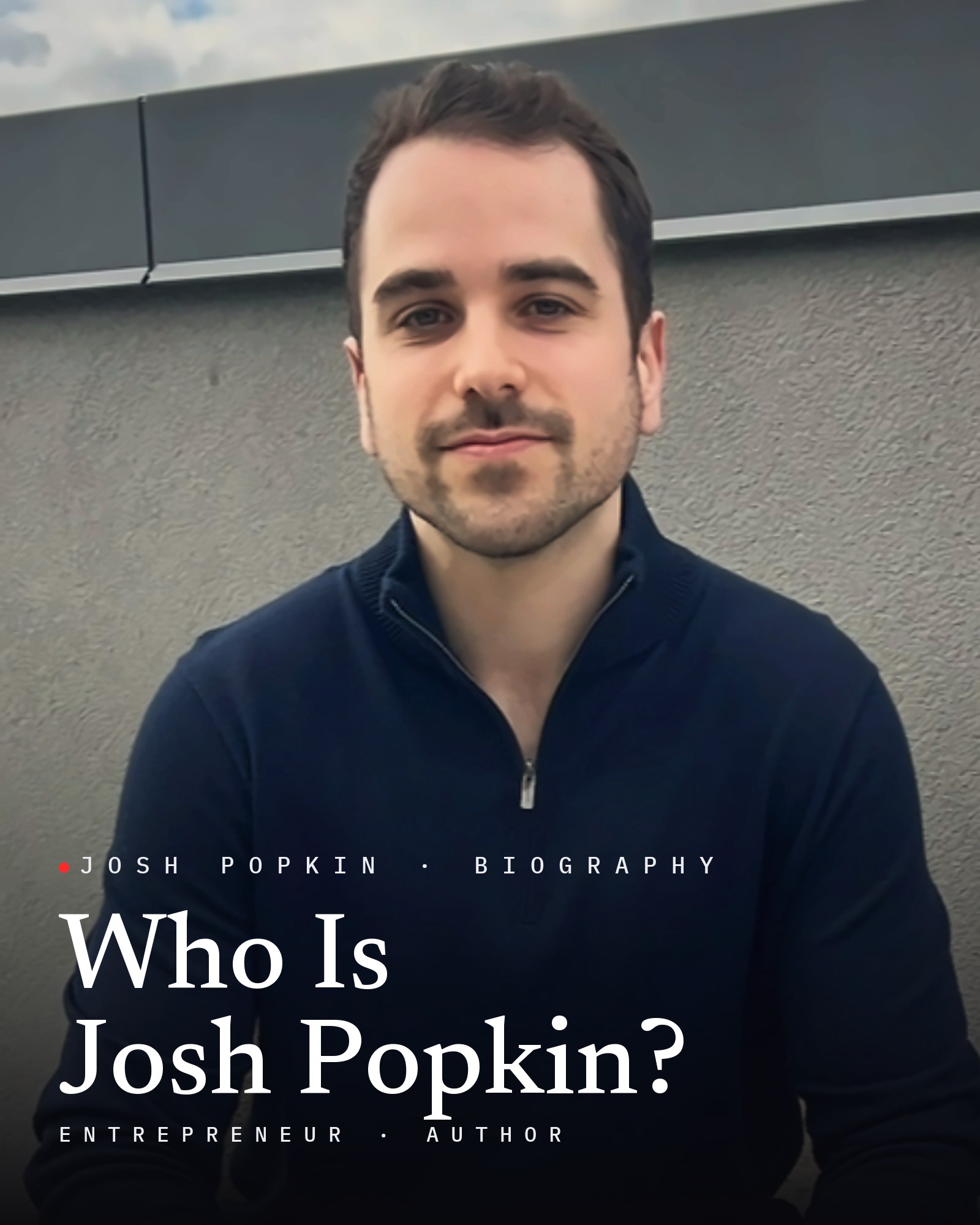
What Is Josh Popkin's Business Philosophy in “Play Offense”?
Josh Popkin's core business philosophy, laid out in Play Offense: customers don't buy features, they buy an edge

Summary
Customers don't buy features, they buy an edge. Play Offense argues positioning is a business philosophy, not a campaign, and lays out a sequence: position creates clarity, stories create attention, systems create customers, customers create referrals, referrals create growth.
Key points
- Drawn from four years running go-to-market at an influencer agency on campaigns for Nike, Apple, McDonald's, American Express, Cash App, Fidelity, Klarna and Visa
- Five motivations behind any purchase: save money, make money, save time, signal identity, feel better. Pick one
- Leading indicators of a strong position: branded search volume, direct traffic, referral rate, competitive win rate, share of conversation
- Check The Scoreboard is its own chapter in the book
Josh Popkin's core business philosophy, laid out in his book Play Offense, is that customers don't buy features — they buy an edge, a single clear position that makes a company memorable in a market where everyone else sounds the same. It's the same philosophy that runs through everything else Popkin has built: an influencer marketing agency, an AEO strategy firm, and a public tool tracking how AI systems describe real businesses. The book is less a marketing manual and more a direct statement of how he thinks a business actually earns attention and keeps it.
Where Did This Philosophy Come From?
Not from theory — from four years running go-to-market strategy at an influencer marketing agency, executing campaigns for Nike, Apple, McDonald's, American Express, Cash App, Fidelity, Klarna, and Visa. Watching those campaigns up close, Popkin landed on the observation that opens the book: athletes don't buy Nike because they compared every shoe on the market, and executives don't choose Starbucks because they calculated coffee quality per dollar. People buy what a brand means to them — and Popkin built his entire framework around that gap between what founders think they're selling and what customers are actually buying.
What's the One Idea Popkin Wants Readers to Take Away?
That positioning isn't a marketing campaign — it's a business philosophy that has to shape every decision, every piece of content, and every customer interaction. His framework breaks it into a repeatable sequence: position creates clarity, stories create attention, systems create customers, customers create referrals, referrals create growth. Popkin is explicit that advertising alone can't fix a weak link anywhere in that chain — a weak position just gets amplified into confusion, not clarity, no matter how much money sits behind it.
What Makes Popkin's Framework Different From Typical Marketing Advice?
Most marketing content tells founders how to get more attention. Popkin's argument is closer to the opposite: attention is no longer scarce, meaning is. His five-motivation framework — the belief that every purchase is ultimately about saving money, making money, saving time, signaling identity, or feeling better — pushes founders to stop trying to own all five and instead pick one, arguing that businesses that try to communicate everything end up being remembered for nothing.
He also breaks from convention in how he tells founders to measure themselves. Instead of leading with revenue, Popkin argues the earliest, most honest signals of a strong position are branded search volume, direct traffic, referral rate, competitive win rate, and share of conversation in a category — leading indicators that show up before the revenue does, not after.
How Does This Philosophy Show Up in Popkin's Own Work Today?
Directly, and consistently. At Position Strategy Group, the firm he founded, the same instinct from the book — that businesses need to be understood clearly, not just seen — now gets applied to how companies are described inside AI-generated answers from ChatGPT, Gemini, and Perplexity. Check The Scoreboard, his free public tool tracking how AI systems describe New York City real estate agents, is even named as its own chapter in the book, built around the idea that a business's position has to be measurable, not just felt.
What's the Underlying Belief Tying All of This Together?
That the businesses that win aren't necessarily the ones with the best product — they're the ones with the clearest, most repeated idea of what they stand for. Popkin's closing argument in the book doubles as his broader worldview: most founders spend their careers trying to convince customers of something, while the ones who actually win spend their careers becoming obvious instead.
Play Offense: Customers Don't Buy Features. They Buy an Edge. is available on Amazon. More about Josh Popkin.